Human-AI Interaction
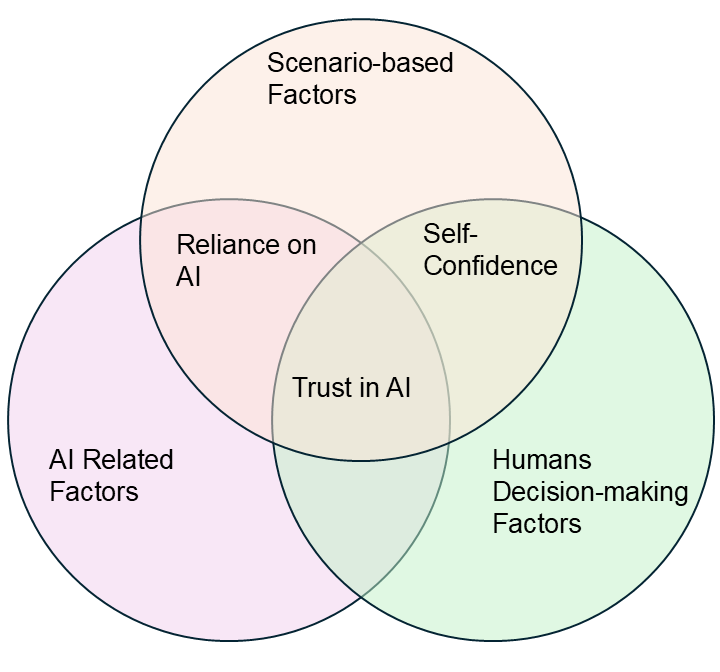
My research in Human–AI Interaction focuses on understanding how people perceive, evaluate, and interact with AI systems in decision-making contexts. I am particularly interested in human trust in AI, including how users calibrate their reliance on AI recommendations under different circumstances such as AI accuracy, AI uncertainty, different AI explanations, etc. I also investigate cognitive and behavioral phenomena, such as imposter bias, that shape human perceptions and interactions with AI. More broadly, my work aims to develop AI systems that support appropriate, transparent, and well-calibrated human decision-making.
I am also interested in investigating how intuitive interfaces and cognitive science principles can facilitate seamless collaboration between humans and AI. This research extends to active learning and adaptive feedback collection, striving to create systems that are both efficient and aligned with human intent.
I am also interested in investigating how intuitive interfaces and cognitive science principles can facilitate seamless collaboration between humans and AI. This research extends to active learning and adaptive feedback collection, striving to create systems that are both efficient and aligned with human intent.
Interpretable Machine Learning
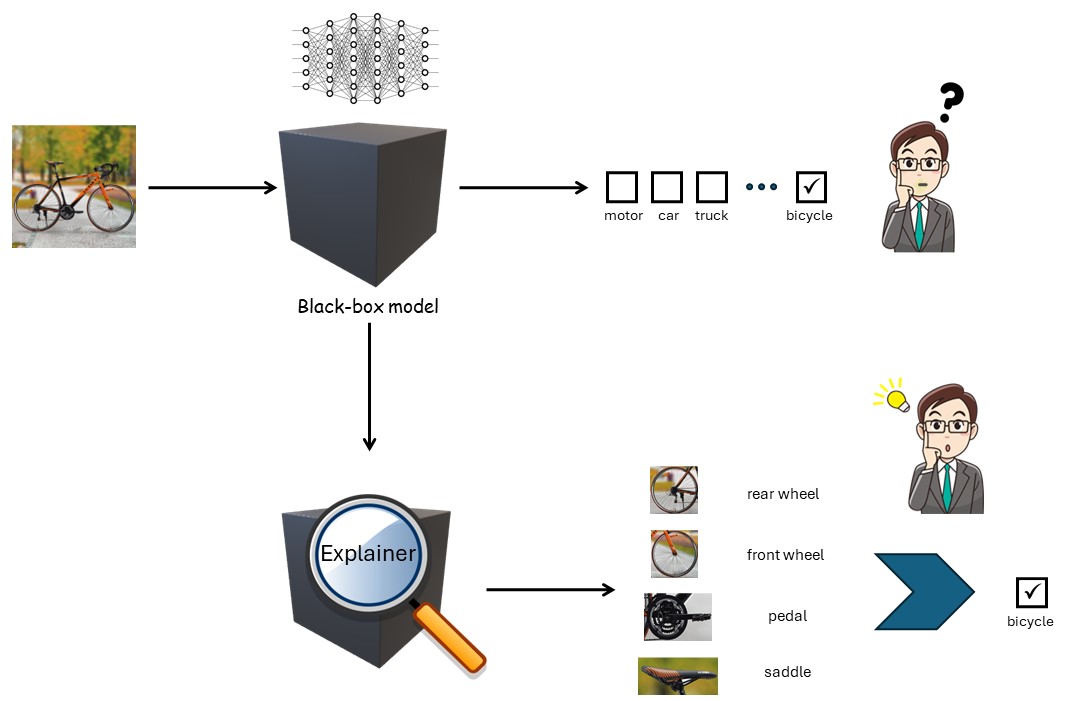
Interpretable ML aims to bridge the gap between highly accurate yet opaque machine learning models and the necessity for transparency
in critical decision-making processes. Among different approaches for interpetable ML, I am particularly interested in counterfactual explanation which provides insights into how altering
certain inputs can change the output of a model. This approach helps in understanding model behavior and aids in identifying potential biases and ensuring fairness in predictions. I am in particular interested in exploring different methodologies to generate robust and meaningful counterfactuals,
with the aim to understand how to enhance the practical applicability of counterfactual explanations in real-world scenarios.
I am also interested in Bayesian methods for model interpretation. Bayesian techniques offer a probabilistic framework that can quantify uncertainty and incorporate prior knowledge into the interpretative process. This aspect of my work focuses on developing and refining Bayesian methods to provide clearer and more actionable insights from machine learning models.
I am also interested in Bayesian methods for model interpretation. Bayesian techniques offer a probabilistic framework that can quantify uncertainty and incorporate prior knowledge into the interpretative process. This aspect of my work focuses on developing and refining Bayesian methods to provide clearer and more actionable insights from machine learning models.
Communication Efficient Distributed Learning/Inference
Deep Neural Networks (DNNs) excel in many Machine Learning (ML) applications mainly for three reasons: (i) access to large training datasets, (ii) development of efficient optimization algorithms, and (iii) availability of computing resources like GPUs.
However, they require significant memory, present slower runtimes, and consume more energy. Fruthermore, centralized data collection for training DNNs raises privacy concerns, limiting the deployment of these models in resource-constrained IoT environments and privacy-sensitive applications.
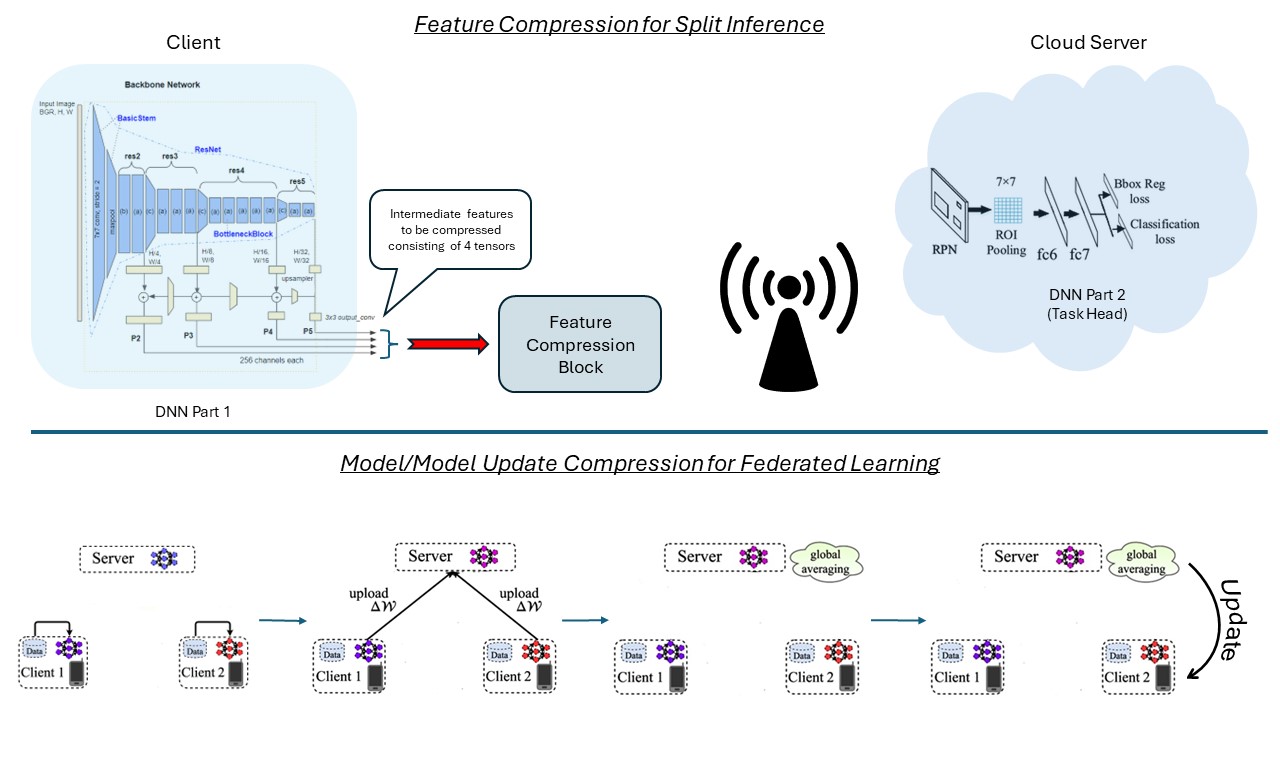
To deal with these issues Federated Learning (FL) has been proposed as a decentralized training approach in which different devices train a DNN collaboratively over an iterative process, without sharing their data. In FL, DNN weights or weight updates are communicated iteratively between devices. Due to the increasing size of DNNs, transfering such data still requires substantial bandwidth. Compressing the data is a potential solution, using techniques like sparsification, pruning, quantization, entropy coding, and distillation. I am interested in developing novel techniques for DNNs compression in FL.
To deal with these issues Federated Learning (FL) has been proposed as a decentralized training approach in which different devices train a DNN collaboratively over an iterative process, without sharing their data. In FL, DNN weights or weight updates are communicated iteratively between devices. Due to the increasing size of DNNs, transfering such data still requires substantial bandwidth. Compressing the data is a potential solution, using techniques like sparsification, pruning, quantization, entropy coding, and distillation. I am interested in developing novel techniques for DNNs compression in FL.
Machine Learning in Agriculture
By 2050, the United Nations (UN) predicts a global population of nearly 10 billion. To feed this population sustainably, the World Resources Institute highlights a 56% food gap and a 593 million-hectare land gap compared to 2010. On the other hand, agriculture, according to the Intergovernmental Panel on Climate Change (IPCC), is responsible for up to 8.5% of greenhouse gas emissions, with an additional 14.5% from land use changes like deforestation.
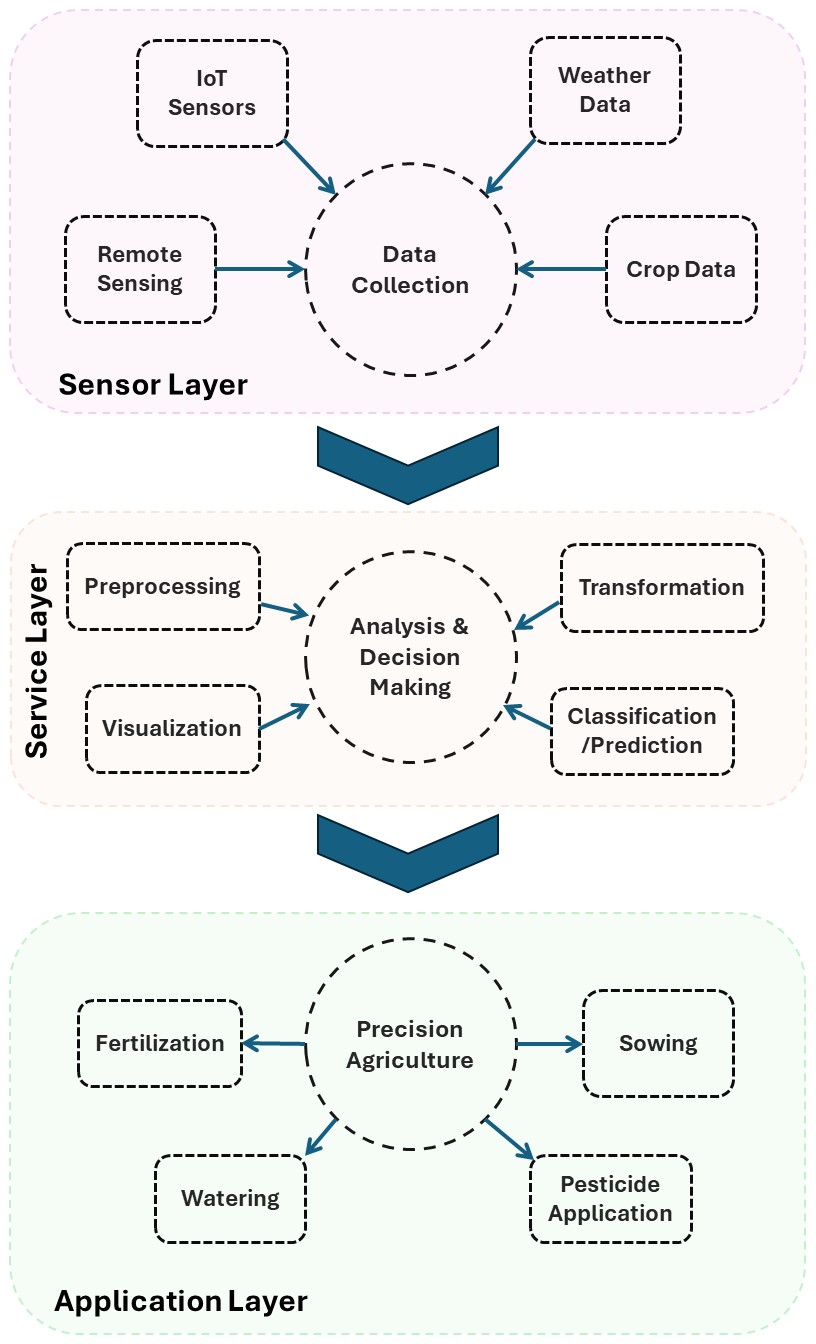
These said, increasing agricultural yield while minimizing waste and environmental damage is crucial for sustainable food production and climate change mitigation. Technologies such as Internet of Things (IoT), AI in general and Machine Learning (ML)/Computer vision (CV) in particular can make agriculture more sustainable by minimizing the use of pesticides, fertilizer and water. These technologies can enable precision farming, a management approach that involves observation and collection of data related to crop health, soil conditions, weather patterns, etc. using sensors, drones, and satellite images and analyze these data for proper response in different conditions. Nokia Bell Labs predicts that if 25% of farms adopt precision farming by 2030, it could increase yields by 300 million tonnes annually, cut farming costs by $100 billion, and reduce water waste by 150 billion cubic meters.
Iran is among the arid countries with increasing vulnerability to drought. This is why I am interested in studying ML/CV methods for efficient precision agriculture and I am open to any collaboration in this field.
These said, increasing agricultural yield while minimizing waste and environmental damage is crucial for sustainable food production and climate change mitigation. Technologies such as Internet of Things (IoT), AI in general and Machine Learning (ML)/Computer vision (CV) in particular can make agriculture more sustainable by minimizing the use of pesticides, fertilizer and water. These technologies can enable precision farming, a management approach that involves observation and collection of data related to crop health, soil conditions, weather patterns, etc. using sensors, drones, and satellite images and analyze these data for proper response in different conditions. Nokia Bell Labs predicts that if 25% of farms adopt precision farming by 2030, it could increase yields by 300 million tonnes annually, cut farming costs by $100 billion, and reduce water waste by 150 billion cubic meters.
Iran is among the arid countries with increasing vulnerability to drought. This is why I am interested in studying ML/CV methods for efficient precision agriculture and I am open to any collaboration in this field.